Borrowing Infrastructure for ETH-Correlated Collateral Markets
Definica’s planned Borrowing Module is intended to let users use approved ETH-correlated positions as collateral and borrow a supported asset without first selling their underlying exposure.
osETH is planned as the primary collateral asset for the initial markets. Eligible aEthosETH positions from the Main Liquidity Module may later support a separate collateral or liquidity-provider path, depending on the configuration of each activated market.

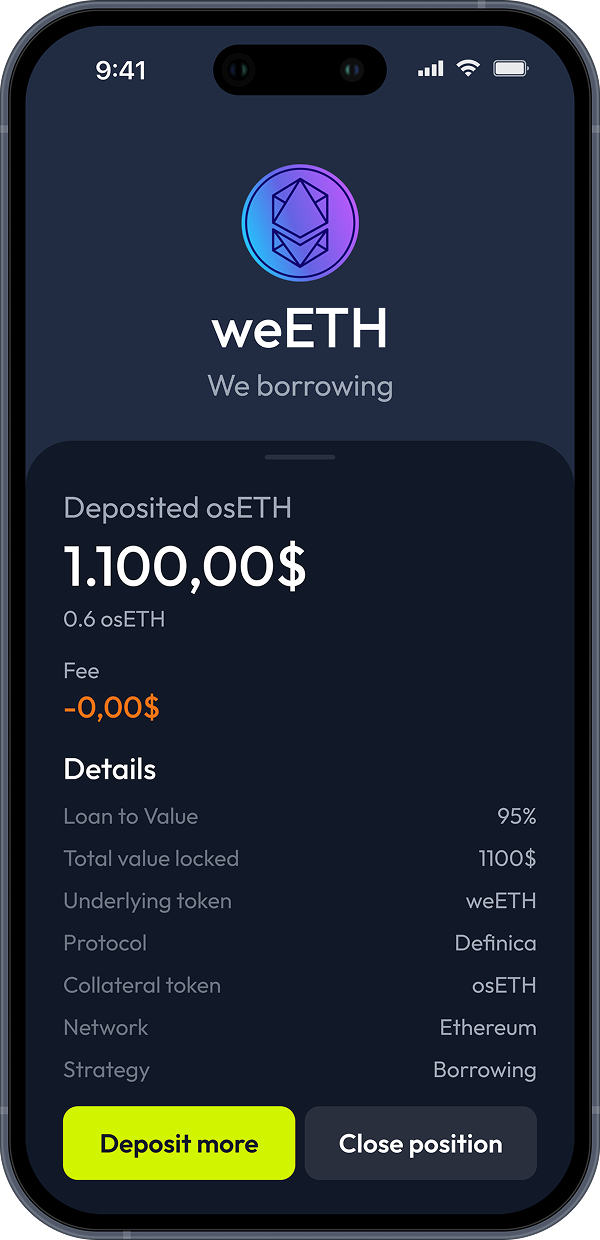
What the Borrowing Module Is Designed to Do
The module is designed to unlock liquidity from an eligible position.
Instead of for example selling osETH, a user may be able to deposit it as collateral, borrow an asset supported by the selected market, and keep economic exposure to the collateral while the loan remains open.
The user must repay the debt and accrued interest to release the collateral. If the collateral value falls, the debt grows, or the position otherwise crosses its liquidation threshold, some or all of the collateral may be sold through liquidation.
Borrowing can therefore provide additional flexibility, but it also introduces debt, interest costs, oracle dependency, and liquidation risk.
The Role of osETH
osETH is planned as the main collateral foundation for Definica’s initial borrowing markets. It connects the borrowing layer with Ethereum staking exposure and with the staking and liquidity stages that come before it.
Using osETH as collateral may allow a user to access another supported asset without first selling the osETH position. The osETH remains subject to its own staking, validator, fee, price, liquidity, redemption, smart-contract, and protocol risks.
Before any osETH market is activated, Definica intends to publish its supported borrow asset, oracle, maximum LTV, liquidation threshold, interest-rate model, market caps, liquidation process, and emergency controls.
The Role of aEthosETH
aEthosETH is intended to represent an eligible osETH position supplied through an activated Aave-compatible liquidity-market route. It represents the supplied position. It does not create a second ETH deposit or duplicate the underlying osETH staking economics.
Depending on the final market design, an eligible aEthosETH position may follow one of two clearly separated paths:
Potential collateral position
A future market may explicitly approve aEthosETH as collateral. Under this model, the position would secure the user’s own debt and require separate oracle, LTV, liquidity, lock, redemption, and liquidation rules.
Main Liquidity Module position
A user may lock aEthosETH inside the Main Liquidity Module. The locked position is intended to help keep eligible supplied osETH liquidity committed for a defined period and may support the liquidity base used by future borrowing markets.
Borrowing Module Summary
- Planned primary collateral
- osETH
- Potential connected position
- aEthosETH from the Main Liquidity Module
- Primary user purpose
- Access a supported asset without first selling an approved ETH-correlated position
- Current status
- Planned and not available for live borrowing
Availability notice
Borrowing is not currently live. Supported assets, deployed contracts, market parameters, oracle assumptions, and activation conditions will be published before any borrowing market is opened to users.